
How each one works
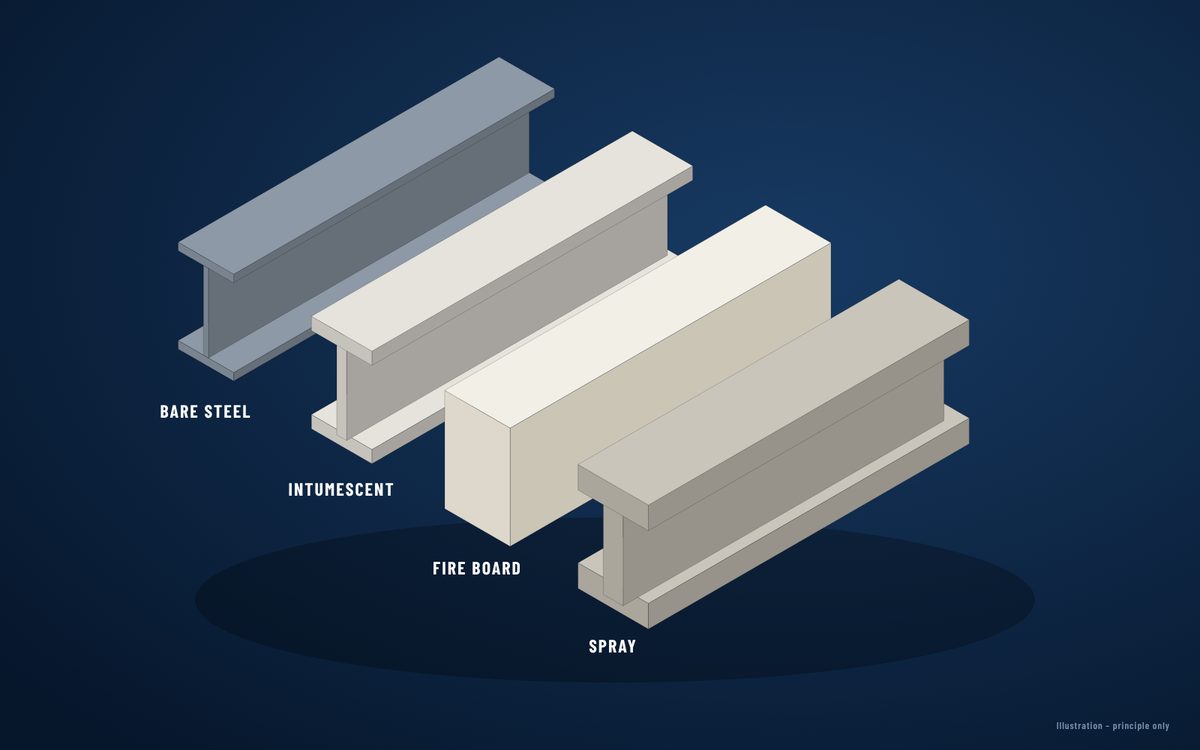
Intumescent is a thin paint film that swells into an insulating char when heated. Cementitious fireproofing is a thick sprayed layer of cement or gypsum with mineral fillers that insulates the steel from the start.
Side by side
| Intumescent | Cementitious | |
|---|---|---|
| Appearance | Smooth, paint-like, any topcoat colour | Rough texture, usually hidden |
| Where applied | In our plant or on site | On site after erection |
| Best rating range | Up to about 2 hours | 2 hours and longer |
| Humid or exposed areas | Solvent or epoxy grades with topcoat | Dense grades only |
| Cost driver | Film thickness per member | Area and thickness on site |
Where intumescent wins
Malls, airports, schools and showrooms with exposed steel; projects that want the coating done before shipping; ratings of 1 to 2 hours on medium and heavy sections.
Where cementitious wins
Long ratings on beams and decks hidden above ceilings, car park soffits and industrial pipe racks with dense grades. Many projects use both – intumescent where people see the steel, spray where they do not.
FAQ
Which lasts longer in coastal air?
Epoxy intumescents and dense cementitious grades are made for harsh exposure. Thin water-based intumescent is for dry interiors.
Can you supply cementitious material?
We coordinate the system with your applicator; shop-applied intumescent is our standard scope.
Preliminary calculations are provided for estimation purposes only. Final coating thickness and fire protection system selection must be verified against the approved product documentation, applicable project requirements and relevant engineering assessments.